
Never underestimate to the power one sticker or a conversation sparked from a cool sharky tee can have! Everyone has the power to make people rethink sharks and inspire real change along the way.
Over the years we've interviewed SHARKFLUENCERS from around the world, working to help these amazing animals and the ecosystems they call home- here's a few we'd like to share:
-----
SHARKFLUENCER Ingrid Hyrycena dos Santos
(she/her); @pimdi on instagram
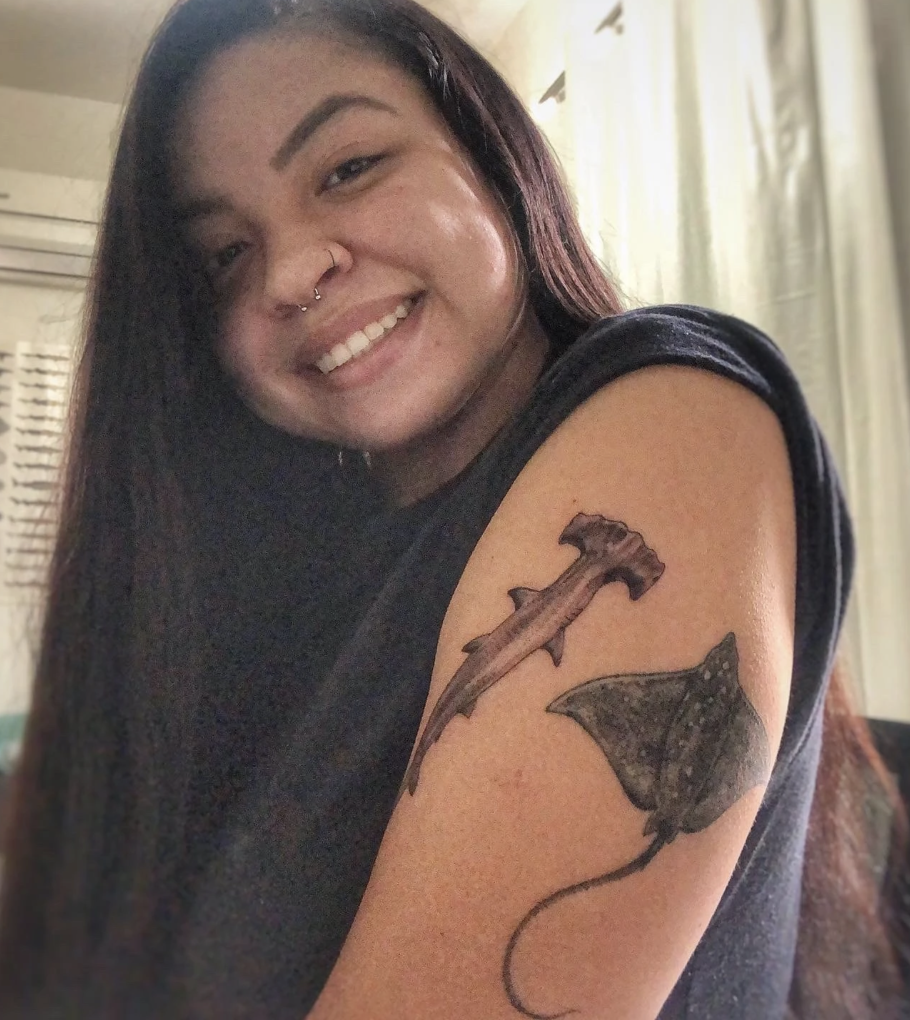
Ingrid is a biologist and founder of @projetotubarao in Brazil!
Q:) What would you tell/what advice or tips would you say to your past self that may help someone wanting to go into marine science?
Learn to differentiate constructive criticism from malicious criticism and bullying. It's important to know the difference because constructive criticism and feedback are essential for us to evolve as a person and professional.
Unfortunately, there are still many people in the academic and professional world who believe that you need to suffer to learn, and that's not true. Knowing how to listen is super important, but also knowing when to ignore and preserve our mental health is even more important.
If you love what you do, don't let anyone tell you that you're not good enough. Study, work, have fun, and have your life purpose. In difficult times, remember how you started, what you've already done, how many things you've overcome, and stay strong!
Q:) What do you think makes a good marine scientist? What skills or courses do you think would help set up students for success that want to pursue a career in shark science?
I believe that to be a good scientist, it is necessary to be a very curious person who is always asking questions. Questioning the veracity of the information you are reading or hearing is very important. Even in our personal lives, we cannot believe everything we see or read out there, so for our professional life as a scientist, we have to be even more careful and questioning. Even if you don't have multiple soft skills at the moment, it's important that you seek to work outside or throughout your college years, whether by taking private courses or watching videos on YouTube on how to develop effective communication, teamwork, critical thinking, and especially problem-solving skills. The rest you will learn through practice and day-to-day experience within the academic world.
-----
SHARKFLUENCER and professional merman ZEE! @the_amazingzee on instagram or you may have caught them on the popular Netflix doc 'MerPeople'
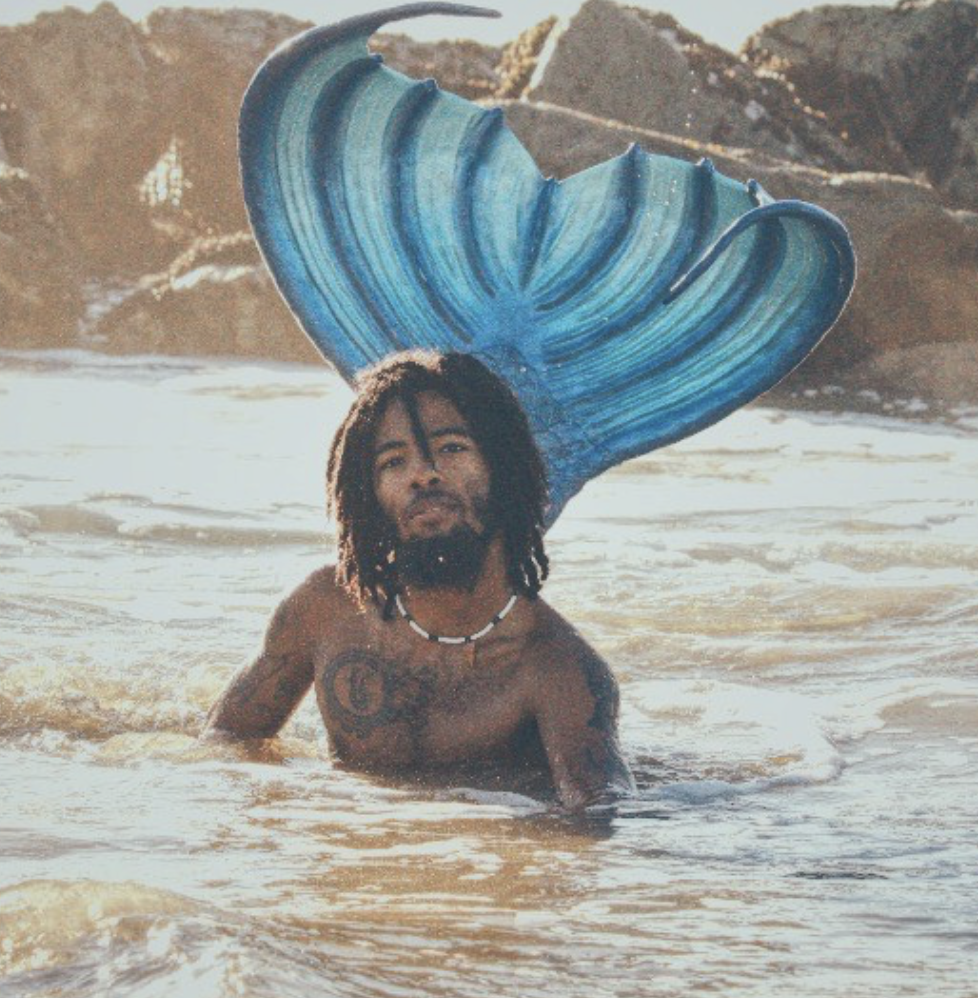
Q:) What do you think makes a good mer? What skills/courses do you think would help set up others for success that want to pursue it?
To me, the first thing that makes a good mer is someone who can understand the balance between the whimsey and the education. We are guardians to the world below and have an ability to reach people and help them gain as much love and passion for the wild world as we do! The best way to do that is to remember that love.
The second thing would be understanding that mermaiding can be dangerous and thereby requires training, one should have strong swimming skills and actively be ready for a wild adventure.
Q:) Have you found success in handling people that don’t understand or agree with shark conservation efforts?
In my time I've come across many who disagree with efforts made to conservative wildlife. The way I always got through to them wasn't through preaching or belittling but open conversation and understanding. Most people know nothing of the importance of sharks and their role in the environment, and many aspects of our society still villainize them.
Many people do not care for issues unless it's in their backyard. I believe to get that to happen so many more conversations and journeys need to be taken and I am looking forward to diving into those talks, to change more minds!
-----
SHARKFLUENCER Andres Michael Goolishian Hernandez
(he/his/him) - @goolishian_uw_photo on instagram
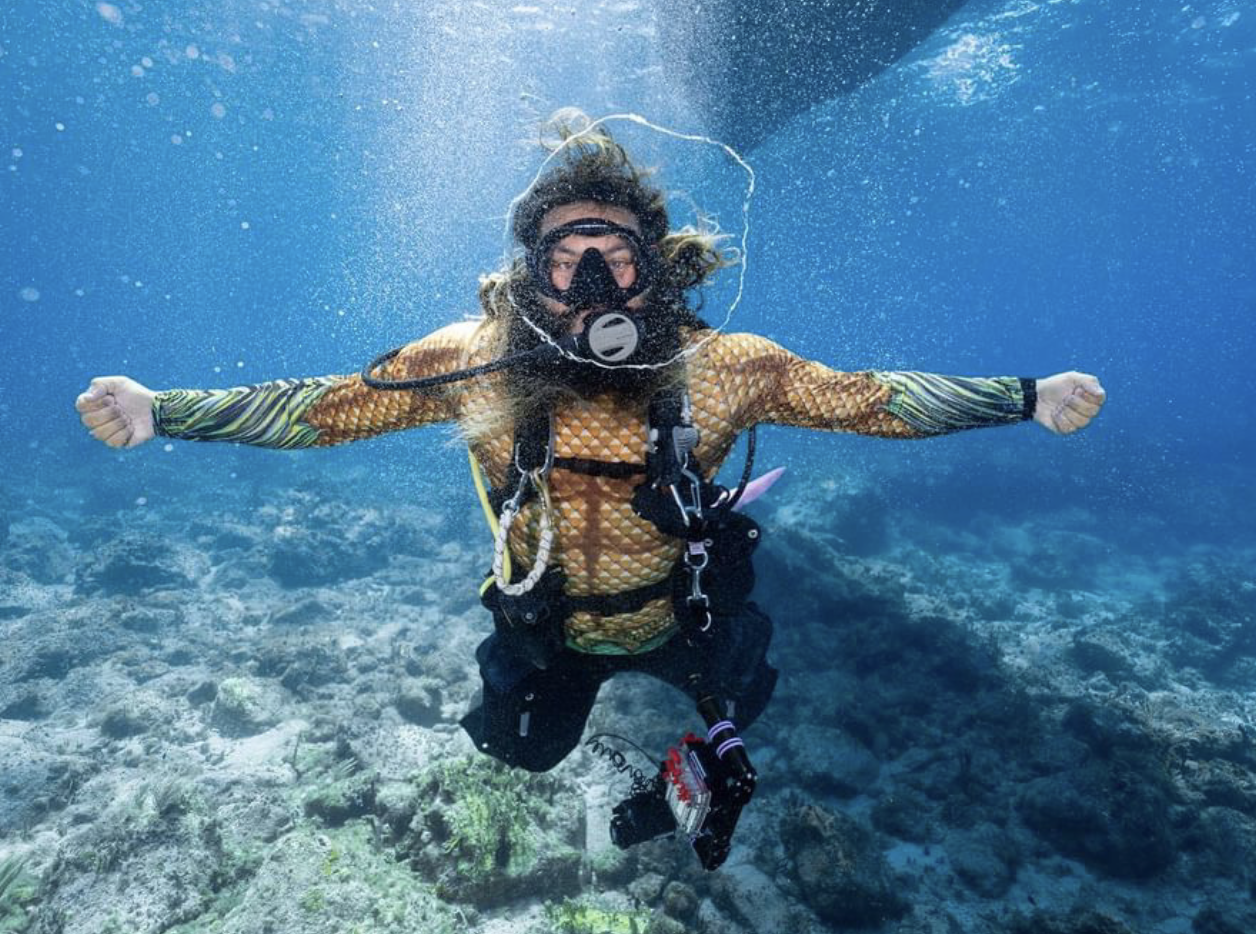
Underwater photographer, PADI instructor and community science diver
Q:) What are some things tourists wanting to go shark diving should look out for from diving operations?
Briefings and safe ecological practices. Sharks are not monsters but they are wild animals. Proper and thorough briefings are something any tourist should look out for when going on a shark encounter. I wish more people knew that interactions are far more rewarding when you stay calm and just take it slow when dealing with sharks. No chasing, no aggravating, no touching.
Q:) What actions or conservation milestones are you working toward?
I am working with the Smithsonian Tropical Research Institute and their Fishes app to help record diagnostic images for public use and consumption. These images will help people be able to correctly identify fish species in their area. I believe with continued additions to this app, we will start to fill in the blanks of how fish in our oceans move, settle, and spread. Which in turn will help policy makers and activists make more conscious and thorough decisions for our oceans.
-----
SHARKFLUENCER Dr. Jeanette Davis - Dr_Ocean24

Marine biologist and bestselling author
Q:) What are some common misconceptions in your field?
One of the common misconceptions is that marine biologist are limited to studying charismatic fauna such as whales, sharks, sea turtles, polar bears, dolphins, etc. but there’s so much more to being a marine biologist. So much of the overall health of our ocean is impacted by the microscopic organisms that you can’t see with the naked eye.
Q:) What advice do you have for someone wanting to get into microbiology or another marine science?
I would tell them to embrace curiosity and failure because it’s the foundation of science including microbiology. I would also mention that modern day microbiologist don’t carry around a microscope to study organisms that we can’t see.
I would advise them to start there and do well in those courses because they are the foundation for microbiology. The large marine life that we can see depend on these microscopic organisms as well as humans. Most of the oxygen that we breathe comes from plant-like microscopic bacteria in the ocean. My specialty is marine bacteria (microscopic) which is why I consider myself a marine microbiologist.
-----
SHARKFLUENCER Anju Sabu
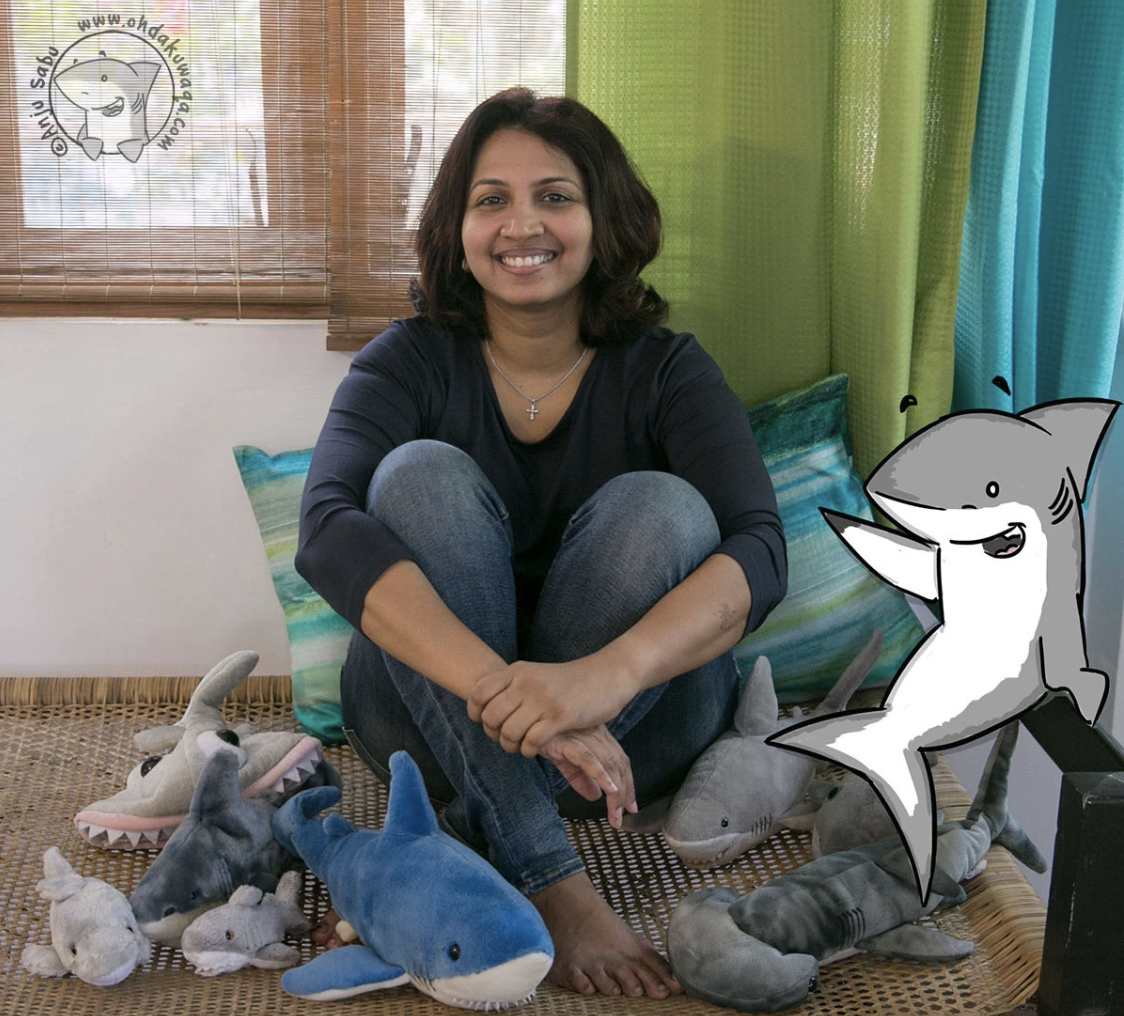
(she/her) - @ohdakuwaqa creator "Oh, Dakuwaqa" series
Q:) Have you had instances of people talking to you about sharks after seeing your work?
Yes, quite a few talk to me about sharks. Inevitably, I get asked “why sharks?” for which I give them my 13 reasons! All of my friends send me any shark related meme/ link/ picture they find. I especially enjoy shark themed goodies that sometimes come my way.
Sharks are still so misunderstood that people find it curious as to why someone would bother drawing them. This gives me an opportunity to have a conversation about them and sometimes they do admit that they learnt something they never knew about sharks. And if they find it interesting enough, the next time they see something on sharks on tv or the internet, they stop and watch. That’s a tiny bit of hope.
Q.) What is your connection to Oh, Dakuwaqa? How did this lovable series get started?
It started with a doodle when I was in school. Then resurfaced years later when I had a personal blog. I used it to illustrate some point I was making. And then I did it some more. Eventually, it was because someone contacted me about doing something against the finning that make me get deeper into it and develop the character and the series.
I just wanted to tell those who may not know, that “Oh, Dakuwaqa!” was the name I gave my series. Dakuwaqa isn’t the name of my shark nor is my shark representative of Dakuwaqa the shark god from Fiji. It does confuse a few but some say the name is intriguing so I’ve let it stick.